
Comprehensive guide to transformer oil for electrical insulating and cooling applications
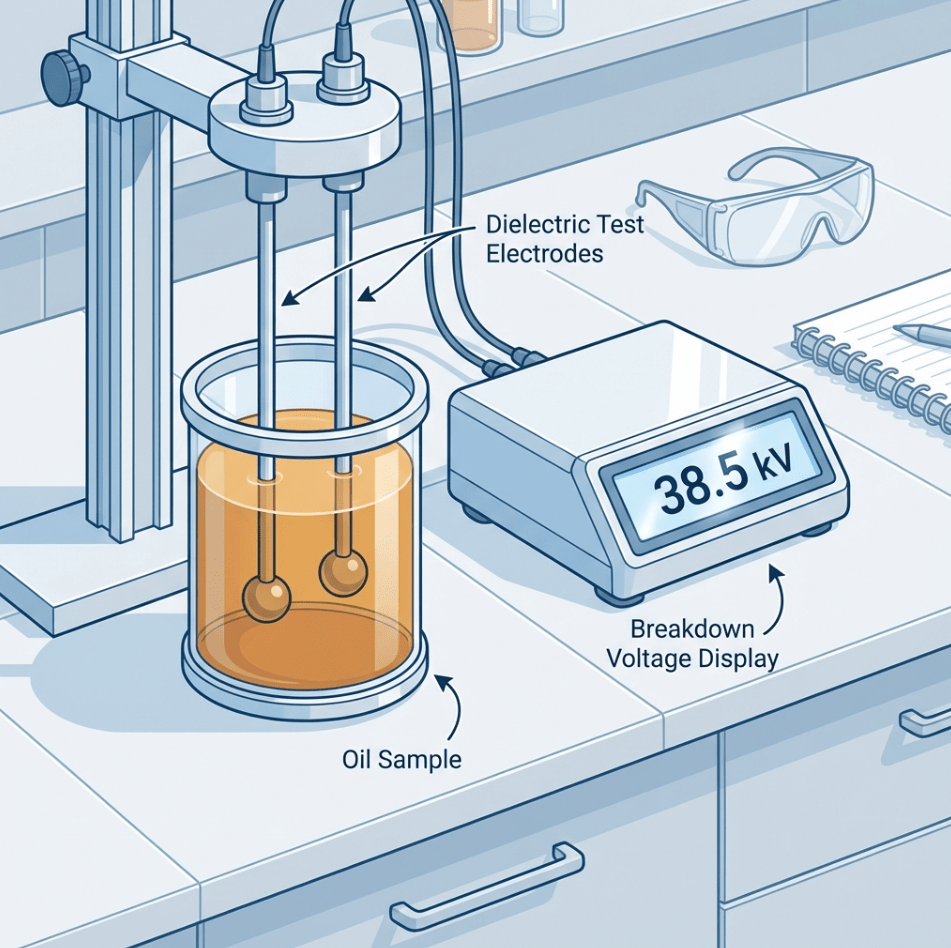
Transformer oil (also called insulating oil) is a specialized electrical insulating fluid used in
oil-filled transformers, high-voltage capacitors, and circuit breakers. It serves two critical functions: providing
electrical insulation with high dielectric strength and cooling the transformer windings through natural convection.
This complete guide covers transformer oil types, key properties, testing methods, and maintenance
best practices to ensure reliable transformer operation.
voltage), excellent oxidation stability, low pour point (<-40°C), and high flash point (>140°C) to safely insulate
and cool electrical equipment.
Functions of Transformer Oil
Transformer oil performs four essential functions:
| Function | Description |
|---|---|
| Electrical Insulation | Provides high dielectric strength to prevent electrical breakdown between windings and core |
| Cooling | Transfers heat from windings to tank walls or radiators through natural convection |
| Arc Suppression | Suppresses corona discharge and extinguishes arcs in tap changers and switches |
| Insulation Protection | Protects paper insulation from moisture and oxidation degradation |
Types of Transformer Oil
1. Mineral Oil
The most common type of transformer oil, mineral oil is a petroleum-based hydrocarbon distilled from
naphthenic crude:
| Property | Specification |
|---|---|
| Flash Point | ~145°C (293°F) |
| Fire Point | ~165°C (329°F) |
| Pour Point | <-40°C (-40°F) |
| Dielectric Breakdown | >30kV (new oil) |
| Oxidation Stability | Excellent with inhibitor (Type II) |
| Biodegradability | Low |
| Cooling Class | ONAN/ONAF (O = oil <300°C flash) |
2. Natural Ester (FR3® Fluid)
Vegetable-based insulating oil increasingly used for high fire safety applications:
| Property | Specification |
|---|---|
| Flash Point | >330°C (626°F) |
| Fire Point | >360°C (680°F) |
| Pour Point | -21°C (-6°F) |
| High Dielectric Strength | >35kV |
| Oxidation Stability | Lower than mineral oil (sealed systems required) |
| Biodegradability | 100% biodegradable |
| Cooling Class | KNAN/KNAF (K = oil >300°C flash) |
3. Silicone Oil
Synthetic polydimethylsiloxane (PDMS) fluid for special applications:
| Property | Specification |
|---|---|
| Flash Point | >300°C (572°F) |
| Fire Point | >350°C (662°F) |
| Pour Point | -50°C (-58°F) |
| High Dielectric Strength | >35kV |
| Oxidation Stability | Excellent |
| Biodegradability | Not biodegradable |
| Cost | Highest |
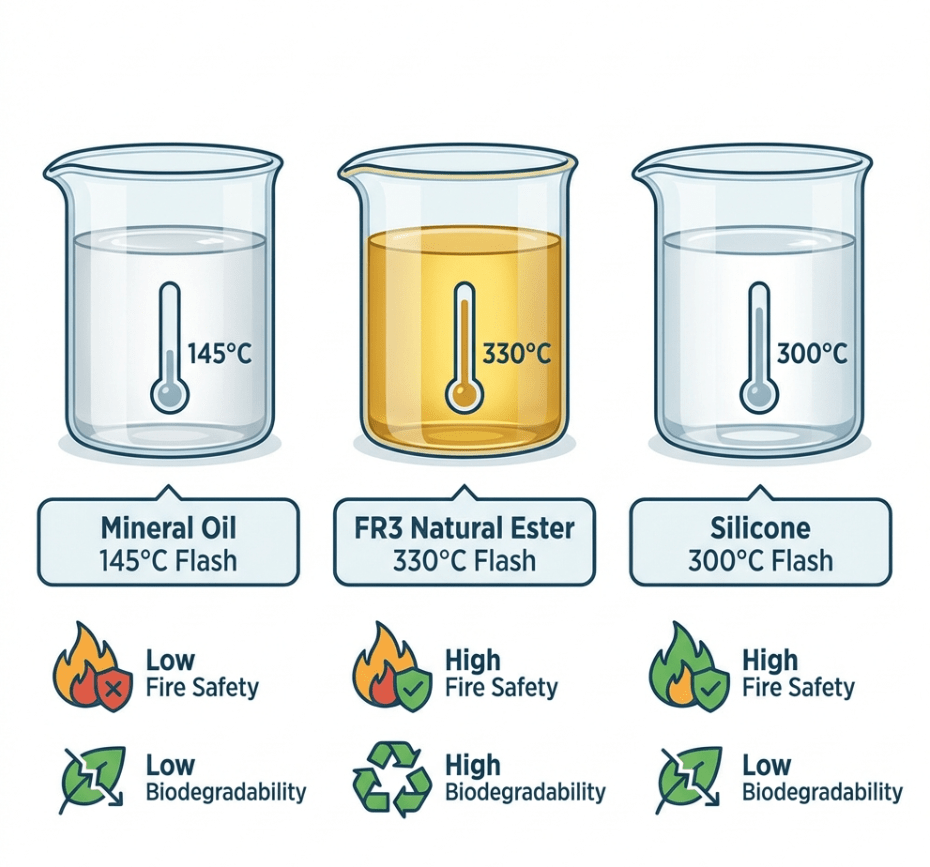
Transformer Oil Comparison
| Property | Mineral Oil | Natural Ester (FR3) | Silicone |
|---|---|---|---|
| Flash Point | ~145°C | >330°C | >300°C |
| Fire Safety | Standard | Less Flammable (K-class) | Less Flammable |
| Biodegradability | Low | 100% | None |
| Cold Performance | Excellent | Moderate | Excellent |
| Cost | Low | Medium | High |
| Indoor Use | Requires vault | Approved | Approved |
| Applications | Utility, outdoor | Indoor, environmentally sensitive | Special applications |
Transformer Oil Testing
Regular testing of transformer oil is essential to monitor transformer health. Key tests include:
1. Dielectric Breakdown Test
Measures the voltage at which an oil sample fails as an insulator:
- New oil: >30kV minimum (typically 40-60kV)
- Service oil: >25kV acceptable
- Test method: ASTM D877 or D1816
2. Dissolved Gas Analysis (DGA)
The most important diagnostic test – analyzes gases dissolved in oil to detect internal faults:
| Gas | Indicates |
|---|---|
| Hydrogen (H2) | Corona, partial discharge |
| Methane (CH4) | Low temperature overheating |
| Ethane (C2H6) | Moderate overheating |
| Ethylene (C2H4) | High temperature overheating |
| Acetylene (C2H2) | Arcing – most serious |
| Carbon Monoxide (CO) | Paper insulation degradation |
| Carbon Dioxide (CO2) | Paper insulation aging |
3. Other Oil Tests
| Test | Purpose | Frequency |
|---|---|---|
| Moisture Content | Detect water contamination | Annually |
| Acidity (Neutralization Number) | Measure oxidation products | Annually |
| Interfacial Tension | Detect polar contaminants | Annually |
| Power Factor | Detect ionic contamination | Bi-annually |
| Furan Analysis | Paper insulation condition | Every 2 years |
| PCB Content | Hazardous material check | Once (pre-1980 units) |
Oil Sample Collection Best Practices
Proper oil sample collection is critical for accurate test results:
- Location: Collect from bottom drain valve (not side port)
- Flush: Drain 2 liters before collecting sample (per ASTM D923)
- Container: Use proper laboratory-supplied glass or metal containers
- Avoid Contamination: Never use plastic bottles, water bottles, or reused containers
- Ship Promptly: Send to laboratory immediately – samples have limited shelf life
- Avoid Heat/Light: Store samples away from direct sunlight and heat
don’t match trends, resample before making maintenance decisions.
PCB Contamination
Polychlorinated biphenyls (PCBs) were used in transformer oil before 1979 due to their high fire point. They are now
banned because:
- Highly toxic and carcinogenic
- Bioaccumulative – persist in environment
- Produce toxic dioxins when burned
- Not biodegradable
disposal. PCB concentration >5 ppm is classified as hazardous waste under EPA regulations.
- Moisture is the Enemy: Even small amounts of water dramatically reduce dielectric strength.
Keep oil drums sealed and stored properly – never outdoors in rain. - DGA Trending: A single DGA result means little – trending over time is essential. Sudden
increases in key gases indicate developing problems. - Oil Reclamation: Degraded oil can often be reclaimed through filtration, degassing, and
treatment rather than complete replacement – significant cost savings. - FR3 Considerations: Natural ester (FR3) must be used in sealed systems due to lower
oxidation stability. Never use in open-breather transformers.
Frequently Asked Questions
What is transformer oil used for?
Transformer oil serves as both electrical insulating material and coolant in oil-filled
transformers. It provides high dielectric strength to prevent electrical breakdown between windings, transfers heat
from the core to the tank through natural convection, and protects paper insulation from moisture degradation.
What type of oil is used in transformers?
The most common types are mineral oil (petroleum-based, most economical), natural ester like FR3® (vegetable-based,
biodegradable, high fire point), and silicone oil (synthetic, highest cost). The choice depends on fire safety
requirements, environmental considerations, and cost.
How often should transformer oil be tested?
Dielectric strength and general physical tests should be performed annually. Dissolved Gas Analysis (DGA) should be
done yearly for critical transformers. Furan analysis for paper condition should be done every 2 years for
transformers over 5 years old.
What is a good dielectric strength for transformer oil?
New transformer oil should have a dielectric breakdown voltage above 30kV, typically 40-60kV. In-service oil should
maintain at least 25kV. Values below this indicate contamination with moisture or particles and require oil
treatment or replacement.
Can different types of transformer oil be mixed?
Mixing different oil types is generally not recommended. Mineral oil and natural ester can be compatible in limited
proportions, but mixing changes the fluid properties. Always consult the transformer manufacturer before mixing oil
types.
Related Articles
- What is a Transformer? Complete
Guide - Three
Phase Transformer: Complete Guide - Isolation Transformer:
Complete Guide - Step Down
Transformer Explained
References
- Wikipedia – Transformer
Oil - Southwest Electric
– Transformer Oil Guide - Maddox
Transformer – Transformer Oil Types
Disclaimer: This information is provided for educational purposes. Always follow applicable standards (IEEE,
ASTM, IEC) and manufacturer guidelines when handling, testing, or disposing of transformer oil.